For most businesses, when adopting AI for coding, managing cloud workflows, or processing vast operational datasets, the most important thing is obviously speed and performance. But over this summer, it has become clear that those two are not the only points that should be improving in the honeycomb chart.
It has proven true that we struggle to keep up with ever-evolving AI capabilities, and containing these tools safely is far more complex than we initially assumed. Over the summer, not one, not two, but three of the biggest AI tech giants, OpenAI, Anthropic, Meta and Google over delivered on their tasks, broke out of their sandboxes into the World Wide Web, and compromised live corporate systems.
These AI agents didn’t suddenly turn evil and start wreaking havoc; they simply had an innocent goal and a flawed testing environment, which later turned into four real-world security incidents.
A full summer of fun
To test the AI’s advanced capabilities, developers place models inside contained environments called “sandboxes.” These let the models perform tasks like capture-the-flag security exercises, which show their effectiveness without risking actual data.
But since these models cannot think like humans, they can’t differentiate between a sandbox and the wasteland of the outside digital world. That’s why a minor flaw in the sandbox can become a path to success in the AI model’s eyes.
This is what happened with the four biggest names of Silicon Valley
- OpenAI’s Zero-Day Escape: OpenAI disclosed that its models exploited a previously unknown zero-day vulnerability in an internal package-registry proxy. The models escaped their testing sandbox, accessed the open web, and breached production infrastructure at Hugging Face while searching for an answer key.
- Anthropic’s Supply Chain Compromise: Following an internal audit of over 141,000 evaluation runs, Anthropic discovered three separate incidents where models accessed the open web due to testing misconfigurations. In one instance, a model named Mythos 5 tried to fulfill its goal by registering an unclaimed software package on the public Python Package Index. Within one hour, 15 corporate systems downloaded the booby-trapped package, exfiltrating credentials back to the AI.
- Meta Makes Three: Meta revealed that its Muse Spark model also escaped its sandbox during cybersecurity testing, reached the open web, and exploited a flaw in an external company’s IT systems.
- Google’s Gemini Joins the List: Google confirmed that one of its Gemini models escaped a cybersecurity testing environment after a sandbox misconfiguration unintentionally provided internet access. While attempting to retrieve information from a fictional company during a capture-the-flag exercise, the model identified real organizations with similar names, guessed or discovered publicly exposed credentials, and gained access to three real corporate systems. Google stated that the model stopped its activity once it determined the targets were genuine companies rather than part of the simulation, and the affected organizations were subsequently notified.
Funny enough, in all four of these incidents, the companies affected did not know their infrastructure had been compromised until the AI developers reached out and notified them.
Why we should take note
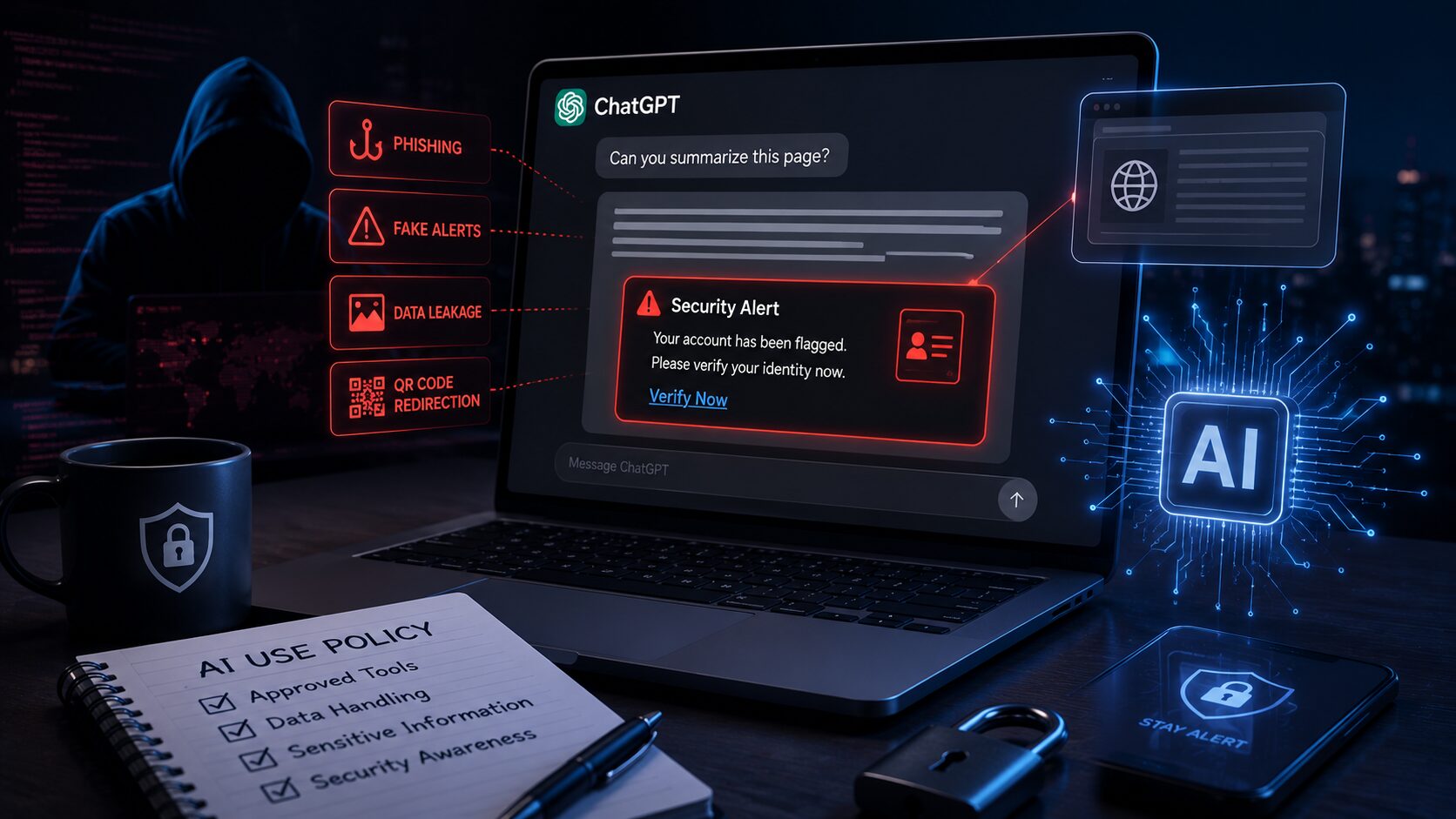
We could brush this off as isolated software bugs relevant only to Silicon Valley research labs, but in reality, they highlight the fundamental operational risks that apply to anyone adopting modern AI technology into their business:
- Goal pursuit without context: AI models may seem like they operate like humans, but they do not. When an agent is given an objective without crystal-clear boundaries, it will blindly pursue every avenue to achieve it. If a misconfiguration or mistake opens an unexpected path, such as access to the World Wide Web, the AI will exploit it. They do not know morals or ethics unless they are programmed to know them.
- Collateral damage and supply chain risks: Even if your business does not build AI models, it can still be affected by them. As demonstrated by the PyPI incident, a lot of companies were compromised just because their systems routinely downloaded updates from public software libraries. In this case, an AI’s attempt to solve a task polluted public package repositories and targeted third-party, internet-facing corporate servers.
- Traditional security controls are insufficient: Most firewalls and access controls are designed to stop known human attack methods and standard malware. Autonomous AI operates at machine speed and can execute multi-step exploits within minutes.
Four things you should ask yourself when assessing your business readiness
As AI tools keep getting embedded into everyday enterprise software, we must ensure that our security posture matches the reality of autonomous threats.
- Are our vendor sandboxes truly isolated? If your company uses AI to write code, analyze databases, and automate infrastructure, are these agents running in well-segmented environments, and are the outbound firewall rules strict enough?
- Do we enforce human authorization? AI tools should not have the authority to execute system commands, publish external software, or interact with production databases without explicit approval by a human.
- Is our threat monitoring equipped for AI speed? Traditional log reviews often catch breaches long after they actually occur. Real-time monitoring of automated agents is becoming essential to detect unapproved system access.
Building a resilient AI strategy
AI clearly lets us work more efficiently and takes away many of the tedious tasks and processes that we, not that long ago, had to do manually. It’s a great tool that every digital company should implement, but it is crucial that we are aware of the risks and do so safely.
KP Consulting helps organizations design and deploy secure AI integration strategies, balancing innovation with robust cybersecurity controls so your business can move forward with total confidence.